
Running out usually becomes visible at the least convenient moment: the last bin liner is already in use, the soap bottle stops pumping, or there is no spare bulb when one fails. A long inventory spreadsheet can prevent this, but it also creates another list to maintain.
A restock trigger is smaller. It identifies the exact moment a household item should enter the shopping system, while there is still enough left to bridge the gap.
Set the trigger from lead time and usage
Start with items whose absence causes real disruption. For each one, notice how quickly you use it and how long replacement normally takes. The trigger is not always “open the last one.” That works for something bought during a weekly shop, but not for a specialty item delivered in ten days.
Examples of useful trigger points include:
- add dishwasher tablets when opening the final small sleeve;
- add pet food when one week remains;
- add printer ink when the spare cartridge goes into the printer;
- add hand soap when refilling the final dispenser.
The quantity is yours to set. What matters is that the trigger happens during normal use, not during a separate stocktake.
Make the signal survive interruption
“I’ll remember later” is not a signal. Use an action that leaves evidence. Add the item directly to one shared shopping list, scan a reorder code, or move a plain marker to the front of the cupboard. If another person buys supplies, the signal must be visible to them too.
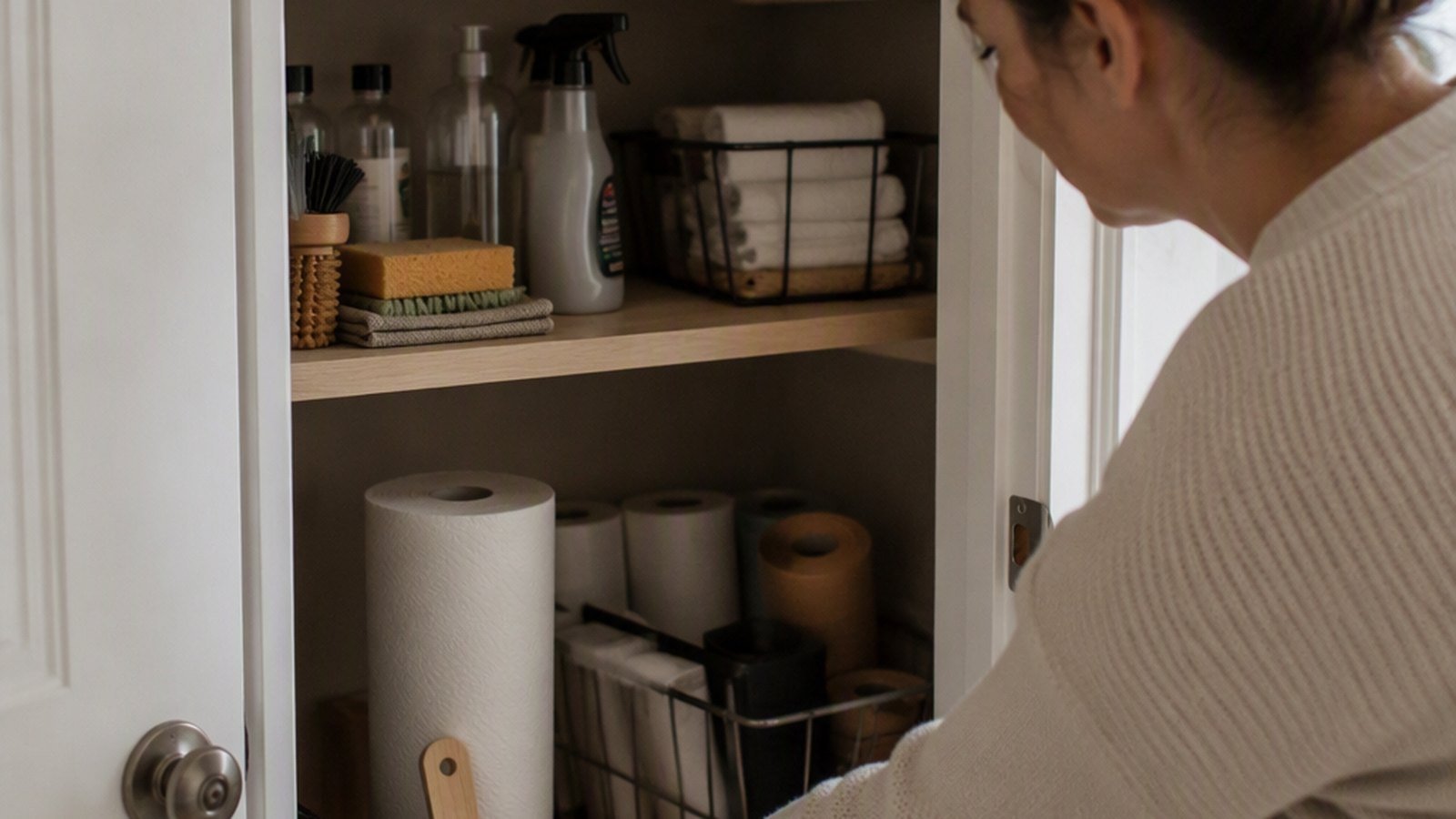
A physical marker helps where phones are inconvenient. Place a wooden peg, reusable tag, or empty divider behind the trigger quantity. When the marker appears, the item goes on the list. Avoid handwritten labels if they become visual clutter; the position can carry the meaning.
Separate emergency stock from ordinary extras
Buying more is not automatically safer. Overstock can hide what you own, occupy useful space, and tie up money. Keep an emergency spare only for items where a short interruption has a meaningful cost.
For ordinary products, define a maximum as well as a trigger. A cupboard might hold one open pack and one backup, not six. The trigger tells you when to buy; the maximum tells you when to stop.
Test the system on five items
Choose five supplies that have run out inconveniently in the past. Write the trigger for each in a single sentence and set up the visible signal. Do not map the whole house.
After two shopping cycles, adjust any trigger that fires too early or too late. Different items deserve different margins. Toilet paper and a rarely used cleaning product do not need the same rule.
Restart at the next use
If the shopping list has drifted or the marker was ignored, there is no backlog to reconcile. Re-establish the trigger the next time you touch that product. The system can recover one item at a time.
A good restock rule is quiet: the need becomes visible, enters one purchasing list, and disappears after the item returns home.
Free GentleDone resource
Overwhelmed? Start with 10 minutes.
The GentleDone 10-Minute Reset gives you one deliberately small place to begin.