
The half cucumber is behind a saucepan. Yesterday’s rice is under a new grocery bag. By the time either item becomes visible again, the useful moment has passed.
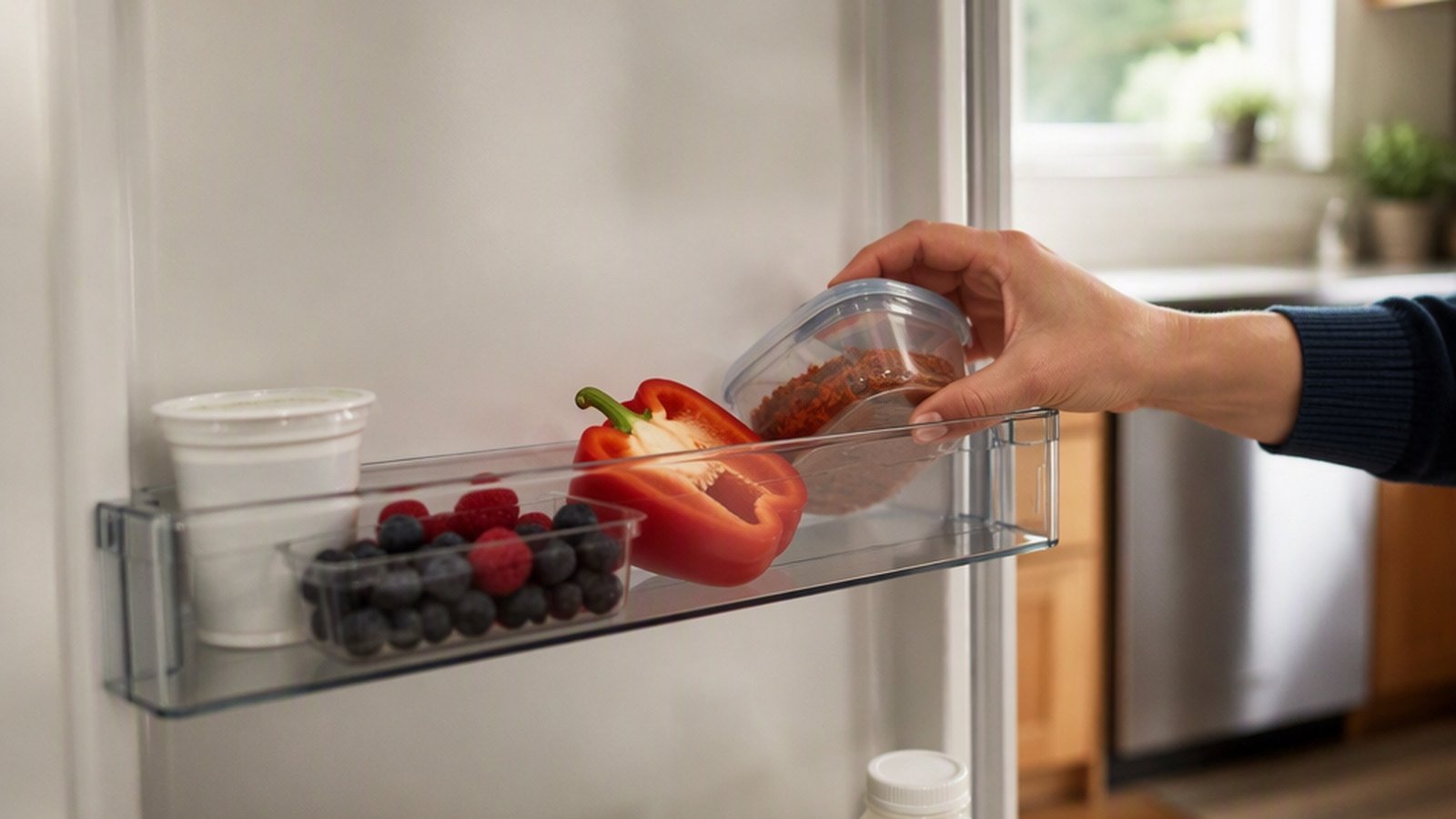
An eat-first zone is a small, highly visible refrigerator area for food that should be considered before unopened or longer-lasting options. It is not a complete fridge reorganization. One shelf section or shallow bin is enough.
Give the zone one job
Use it for opened packages, ripe produce, leftovers you intend to eat, and ingredients already assigned to the next meal. Do not use it for every snack, condiment, or item with an approaching date. When the zone becomes a second refrigerator, it loses its signal.
Place it at eye level if possible. A clear, shallow container works because food remains visible and nothing can hide behind a deep stack. If a bin creates one more object to clean, reserve a section of the front shelf instead.
Move food when its status changes
The useful moment to move an item is when you open it, store leftovers, or notice that produce is ready. This is easier than conducting a separate inspection later.
Imagine Tuesday dinner leaves one portion of pasta. Put it in the zone while packing it, not behind the milk where there happens to be space. On Wednesday, the visible container becomes an option before you start another meal.
Choose from the zone before making a new plan
Look there at one reliable decision point: before writing a shopping list, choosing lunch, or starting dinner. Ask only, “Can one item here fit what I am already doing?” You do not have to invent a meal that combines everything.
- Add ripe fruit to breakfast.
- Use one leftover portion for lunch.
- Move an ingredient into tonight’s simple meal.
- Freeze an item you will not use soon, when freezing is appropriate for that food.
This is a priority view, not a guilt shelf. Food can still become unsuitable or unwanted. Dispose of anything you would not safely choose to eat; visibility is not a reason to take a food-safety risk.
Keep the zone smaller than your good intentions
A packed bin creates sorting work. Set a physical limit: one shallow container or one third of a shelf. When it is full, pause before opening another duplicate or adding more perishable groceries.
Some households need two simple divisions, such as “eat soon” and “planned for dinner.” Add that split only when people repeatedly take meal ingredients by mistake. Otherwise, one zone is easier to scan.
Reset without emptying the refrigerator
If the zone has become mixed or ignored, remove only its contents. Wipe the small area, discard what is no longer usable, return unopened long-life items to their normal homes, and place back no more than a few current priorities.
The reset should take less effort than a full-fridge clean. The useful outcome is a visible next choice, not matching containers.
Free GentleDone resource
Overwhelmed? Start with 10 minutes.
The GentleDone 10-Minute Reset gives you one deliberately small place to begin.