
A bathroom reset is not a shortened deep clean. It is a fixed route that restores the parts needed for the next ordinary use: the sink zone, toilet zone, towels and supplies, and a clear floor path.
Set a boundary of about ten minutes. The boundary decides what belongs in the reset; it is not a promise that every bathroom or starting condition will fit the same clock.
Check the room before starting the timer
Pause if you see a leak, damaged surface, sewage, sharps, significant mold, a chemical spill, or another condition that needs repair, protective equipment, specialist guidance, or more time. A quick reset should not hide a safety problem.
Choose one product that is appropriate for the surfaces you are cleaning and follow its label. Never mix bleach or disinfectants with other cleaners. CDC bleach-safety guidance warns that mixing products can release dangerous vapors. Use ventilation and protective measures specified on the label.
Bring a waste bag, the suitable cleaning product, separate cloths or paper towels for appropriate zones, and the normal floor tool. Do not spend the reset assembling a large caddy.
Follow the same four stops
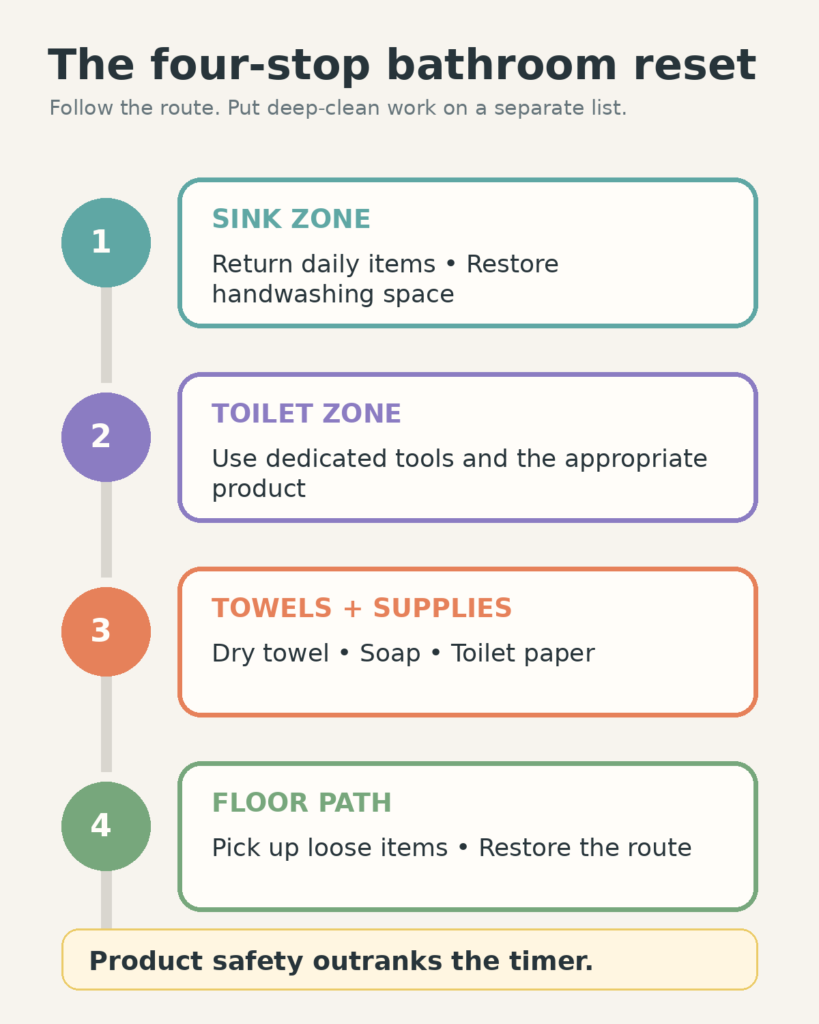
- Sink zone: return daily items, remove obvious waste, and clean the accessible sink and counter area.
- Toilet zone: use the appropriate dedicated tool and product for the seat, lid, handle, and accessible exterior surfaces.
- Towels and supplies: place a dry hand towel, restore toilet paper and soap, and put products back in their normal homes.
- Floor path: pick up loose items and restore the walking route; use the suitable quick floor method only if time and conditions allow.
Move in order. If you notice a drawer, shower screen, grout line, or cabinet that needs deeper attention, place it on a separate list and continue the route.
A practical ten-minute route
The exact time varies by room size, products, mobility, starting condition, and what the surfaces require. Use these ranges as a boundary, not a performance target.
- Minute 0–1: ventilate as appropriate, gather supplies, and remove obvious waste.
- Minute 1–4: restore and clean the sink zone.
- Minute 4–7: restore and clean the toilet zone with dedicated tools.
- Minute 7–9: replace the towel and replenish essential supplies.
- Minute 9–10: clear the floor path, return tools, and stop.
If a product needs a stated contact time, follow the label even when it exceeds this outline. Product safety outranks the timer.
Do not confuse ordinary cleaning with disinfection
CDC household guidance says cleaning alone can remove most germs in many situations, while disinfection is more relevant when someone is sick or at higher risk. A routine reset should not claim to disinfect the bathroom unless you used the correct product exactly as directed.
If illness, immune risk, or local public-health guidance changes what the household needs, use the appropriate cleaning and disinfection process rather than this general reset alone.
Separate the shower and deep-clean work
The shower or bath often has its own materials, ventilation needs, product directions, and buildup. Include it in the quick route only when a simple rinse, item return, or safe surface wipe genuinely fits.
Keep these jobs outside the reset unless one has become necessary:
- descaling fixtures or shower screens;
- scrubbing grout;
- washing walls, vents, or light fittings;
- sorting cabinets and expired products;
- repairing sealant, drainage, leaks, or ventilation.
Putting these jobs on a separate list does not mean they never happen. It stops them from expanding every ordinary reset.
Use a smaller version when ten minutes is not available
Restore the toilet paper and soap, place a dry towel, clear enough of the sink for handwashing, remove urgent waste, and make the floor path safe. Stop there.
This minimum version protects function. It is not a substitute for needed cleaning, disinfection, repair, or professional help.
See the route in an ordinary messy bathroom
The counter holds skincare bottles, two cups, and yesterday’s clothes. The towel is damp. Toilet paper is nearly finished. A full clean is not realistic before leaving for work.
Return the daily bottles to one tray, move the clothes to their current laundry destination, clear and clean the handwashing area, complete the toilet-zone step with the appropriate dedicated tools, replace the towel and roll, and clear the path. The shower door and drawer remain on the deep-clean list.
The room is not finished in every possible sense. It is ready for the next use.
Make the next reset easier
Store a small waste-bag supply where the bin is used. Give daily counter items one visible boundary. Keep the appropriate bathroom cloths or tools separate from kitchen use. Place replacement towels and toilet paper where they can be reached without opening several containers.
For a wider room-by-room method, use The GentleDone Cleaning System. If dishes are the recurring blockage elsewhere in the home, the Dish Reset uses the same idea: restore the route before expanding the job.
On the next difficult day, start at the sink zone and follow the four stops. The route remembers the order so you do not have to scan the whole room again.
Free GentleDone resource
Overwhelmed? Start with 10 minutes.
The GentleDone 10-Minute Reset gives you one deliberately small place to begin.