
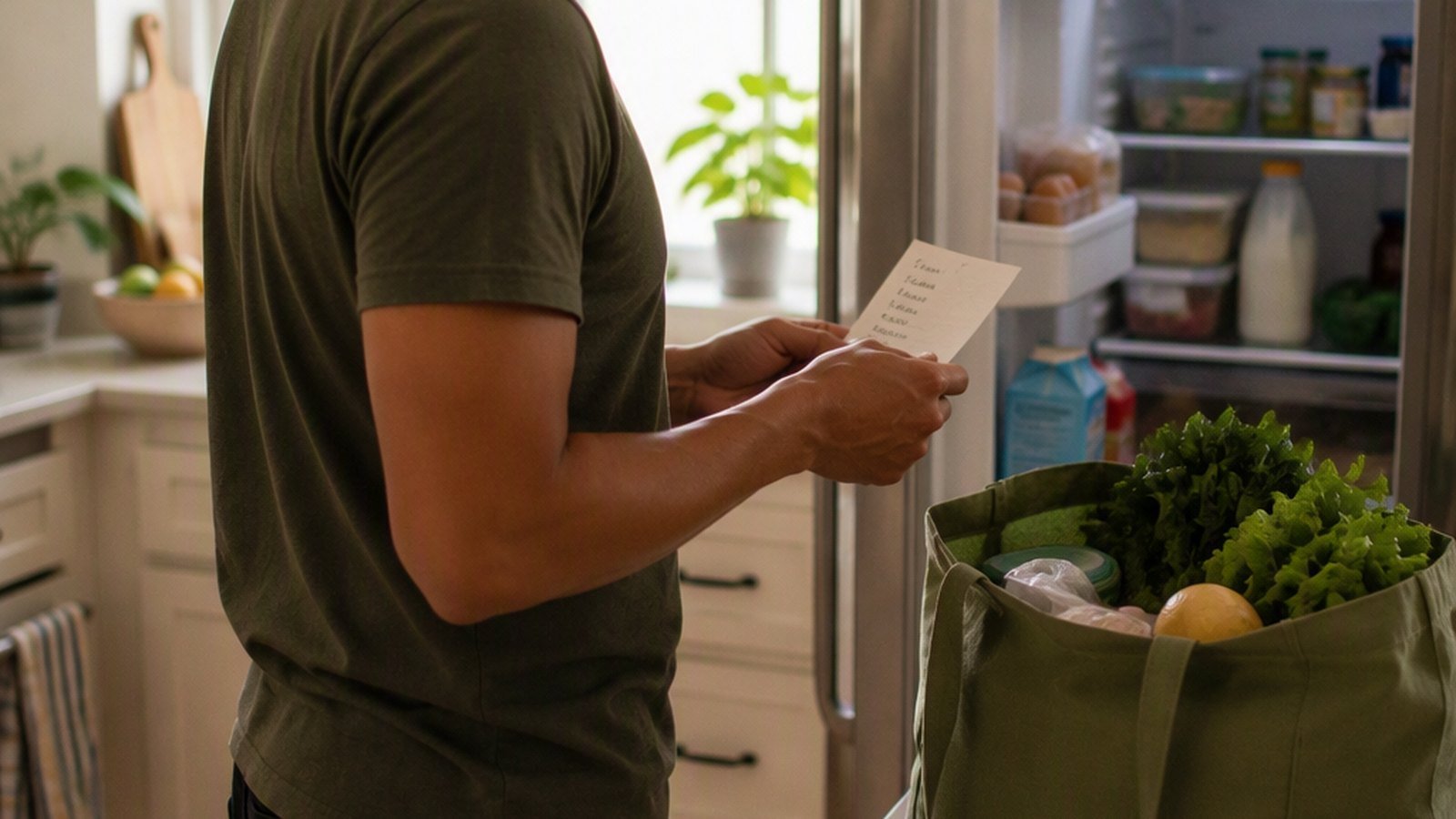
Grocery lists become long when they mix tonight’s dinner, household supplies, ideas for next month, and items already sitting in the cupboard. A list can be complete and still be hard to use in a shop.
Separate now from later
Keep a short “next shop” list for things you expect to buy on the next ordinary trip. Put ideas, bulk purchases, and special-event ingredients somewhere else. The shopping list should describe a likely visit, not the whole future.
Group by the way you move
Use the store’s natural sequence or your normal route: produce, chilled, cupboard, household. Grouping by shopping moment reduces backtracking better than grouping by abstract food category.
Write the decision, not the category
“Yogurt for Wednesday breakfast” is more useful than “dairy.” Add quantity only when it changes the purchase. If there are acceptable substitutes, note the constraint rather than a brand you may not find.
Review before you leave
Look at the list once before leaving home. Check the fridge, freezer, and the meal or event that caused the item to be added. Remove anything already solved. This is faster than discovering duplicate purchases at the checkout.
Restart after a missed shop
Do not rebuild the list from memory. Start with the next meal, the next essential, and one item that prevents an inconvenient run-out. The list earns trust by staying current, not by containing every possibility.
Free GentleDone resource
Overwhelmed? Start with 10 minutes.
The GentleDone 10-Minute Reset gives you one deliberately small place to begin.