
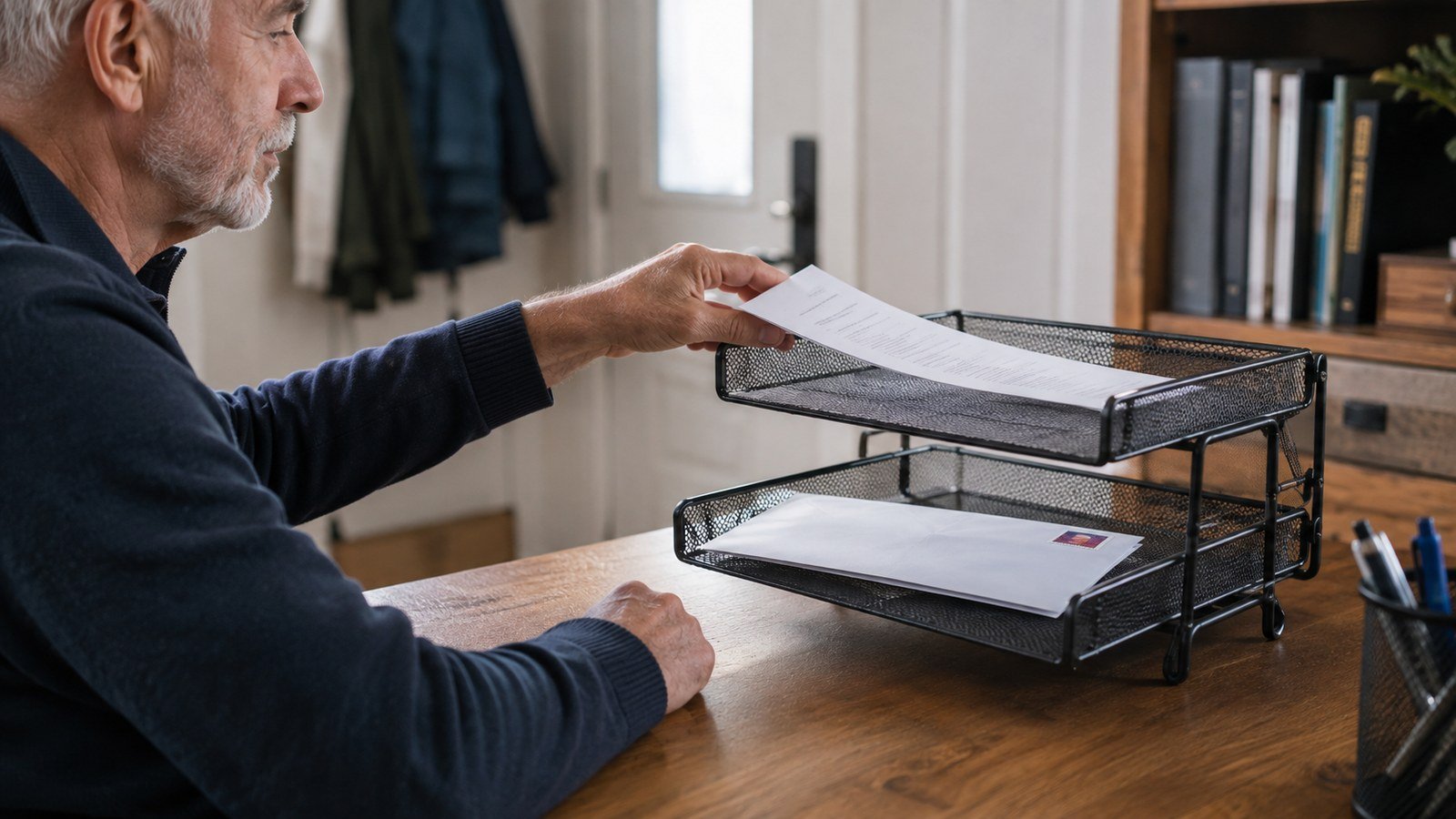
A two-tray paper system needs only two states: papers that require action and papers that are waiting to leave. The wrong tray can still make that simple system hard to use. A narrow opening hides the lower stack. A large footprint takes the only clear work surface. A deep tray becomes an archive.
Choose the physical format by visibility, paper size, access, footprint, and how you will empty it—not by how many tiers look impressive.
Measure the route before the product
- Measure the desk, shelf, or entry surface where papers actually arrive.
- Check the largest paper or folder that must fit: US Letter, A4, legal, or oversize folders.
- Decide whether you need front access, side access, or pull-out compartments.
- Choose two labels: Action and Exit.
- Name the emptying trigger before buying.
Five formats worth comparing
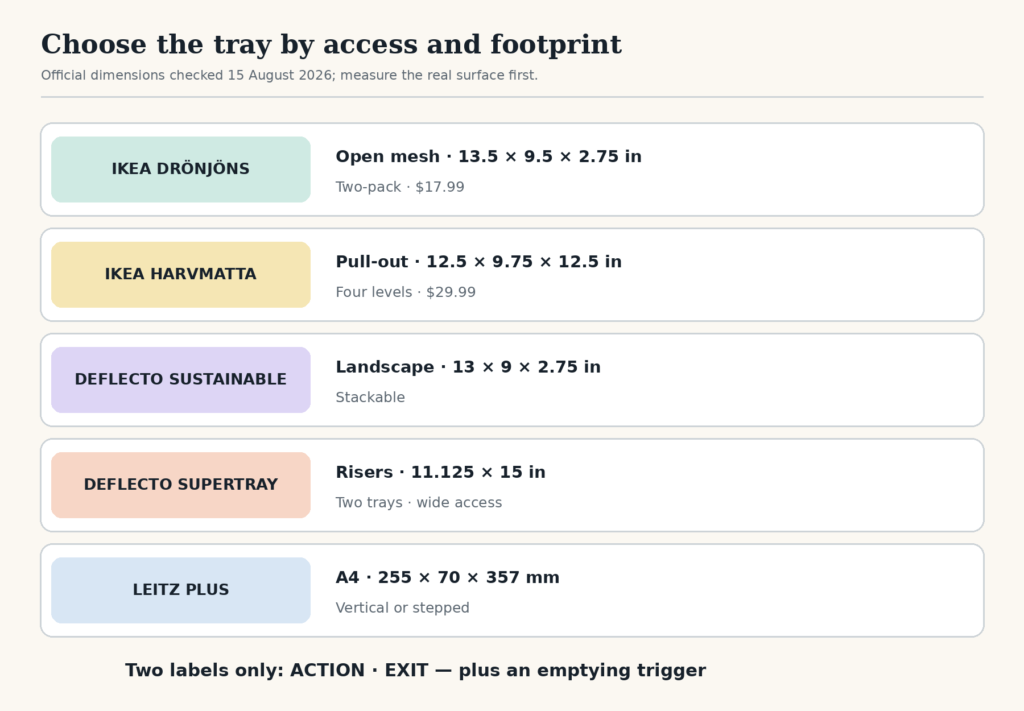
IKEA DRÖNJÖNS: open mesh, two separate or stacked trays
Best fit: a visible, inexpensive two-state system for loose Letter or A4 papers.
IKEA lists the DRÖNJÖNS as a two-pack of powder-coated steel mesh trays that can be stacked or used separately. Each tray is 13.5 inches wide, 9.5 inches deep, and 2.75 inches high. The US price was $17.99 per two-pack when checked. The open mesh keeps contents visible, but the lower opening may feel tight if thick folders accumulate. See the official DRÖNJÖNS page.
IKEA HARVMATTA: fixed vertical sorter with pull-out cork-lined trays
Best fit: someone who wants several contained levels and easy pull-out access on a deeper, permanent desk or shelf location.
The HARVMATTA is listed at 12.5 inches wide, 9.75 inches deep, and 12.5 inches high. Its metal compartments pull out, and cork liners help keep papers in place. The US price was $29.99 when checked. Four levels exceed the needs of a strict two-tray system, so label only two functional trays and reserve or remove the others from the active route. See the official HARVMATTA page.
Deflecto Sustainable Office Stackable Desk Tray: landscape access
Best fit: a shallow landscape footprint when the paper’s long edge should remain visible.
Deflecto lists this polystyrene tray at 13 inches wide, 9 inches deep, and 2.75 inches high. Stack two for Action and Exit. A landscape tray can make labels and paper edges easier to scan, but measure the full 13-inch desk width before choosing it. See the official Deflecto page.
Deflecto SuperTray set: wide openings with risers
Best fit: thicker folders, catalogs, or a route that needs more vertical clearance between two trays.
The official SuperTray set includes two stackable trays plus 3-inch and 5-inch risers. Each tray is listed at 11.125 inches wide and 15 inches deep, with a 2.625-inch tray height. The larger depth and optional tall opening improve access but demand more desk or shelf space. See the official SuperTray page.
Leitz Plus Standard: A4 modular stacking
Best fit: an A4-based system that may need vertical or stepped stacking and compatible modules later.
Leitz lists the Plus Standard tray at 255 by 70 by 357 mm, made from polystyrene for A4 paper, with a large front cutout and vertical or stepped stacking. The manufacturer page did not present a universal direct price, so compare current regional retailers. Its 357 mm depth is important to measure on a shallow desk. See the official Leitz page.
Choose the opening before the material
| Opening | Useful when | Possible friction |
|---|---|---|
| Front-load portrait | Desk depth is available and paper arrives short-edge first | Deep trays can hide small receipts |
| Side-load landscape | Wide surfaces and visible labels matter | Consumes more horizontal space |
| Pull-out compartment | You want contained stacks and full access | Fixed structure and extra height |
| Riser-separated trays | Folders or thick packets must fit | Large total footprint and capacity creep |
Prevent the tray from becoming storage
Capacity is not always a benefit. A shallow tray creates an earlier signal to process paper. Write an emptying rule:
- Action is reviewed every weekday or before the tray reaches the label line.
- Exit leaves the house or office on the next relevant trip.
- Receipts smaller than the tray live in one envelope or shallow insert, not loose beneath papers.
- Reference papers bypass both trays and go directly to their permanent home.
The Two-Tray Paper System explains the Action and Exit routes. If papers are piling up because objects have no stable home, use low-friction home organization before adding more containers.
Make a cardboard test first
Mark the proposed footprint with scrap paper or cardboard and leave it in place for two days. Slide real folders in from the direction you expect to use. Check whether you can read the labels, reach the lower level, open nearby drawers, and keep the work surface usable.
The right sorter makes two decisions easier. If it creates four categories, hides the lower tray, or occupies the place where you need to work, it is adding furniture before fixing the route.
Free GentleDone resource
Overwhelmed? Start with 10 minutes.
The GentleDone 10-Minute Reset gives you one deliberately small place to begin.