
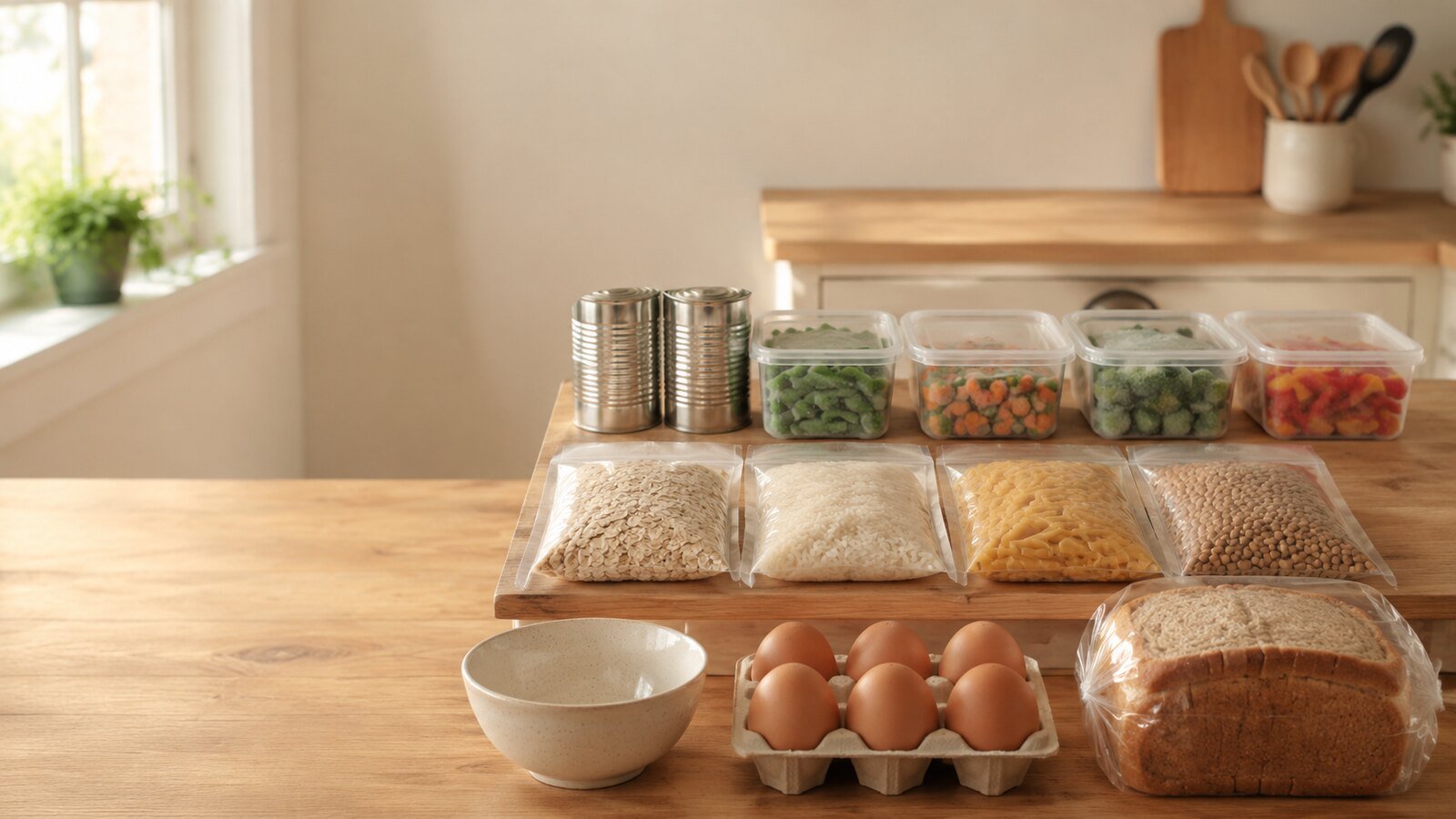
At 8:20 p.m., “What should I eat?” can become a much larger question than it was at noon. Ingredients exist, but they do not form an obvious meal. Ordering feels expensive, cooking feels long, and every option creates more dishes.
A backup meal system is a small set of predetermined combinations for that exact moment. It is not a complete meal plan and it does not need to be your most impressive food.
Choose a meal formula you already understand
Use four parts as a shopping and assembly prompt:
- Base: bread, rice, noodles, oats, tortillas, or another familiar staple.
- Anchor: beans, eggs, yogurt, tofu, fish, chicken, lentils, or another food that makes the meal feel substantial for you.
- Produce: frozen vegetables, canned vegetables, fruit, salad leaves, or a prepared vegetable you will actually eat.
- Flavor: sauce, seasoning, cheese, herbs, broth, or a condiment that makes the combination recognizable.
This is a decision tool, not a nutrition prescription. Adapt it for allergies, cultural preferences, dietary requirements, available appliances, and advice from your qualified health professional where relevant.
Stock three levels of effort
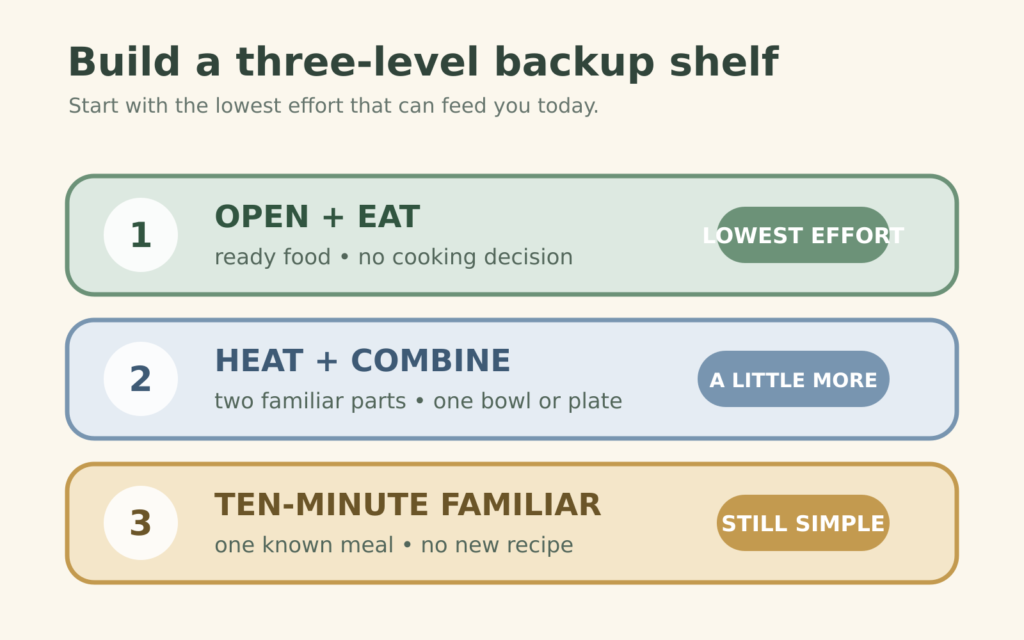
Open and eat options require no cooking beyond opening or combining: crackers with a suitable spread and fruit, yogurt with oats, or a ready-to-eat bean salad that meets your needs.
Heat and combine options use one appliance and one container: microwave rice with beans and frozen vegetables, soup with bread and a side, or a frozen entrée plus an easy produce item.
Ten-minute familiar options involve a short sequence you already know: eggs on toast, noodles with frozen vegetables and tofu, or a quesadilla with beans and salsa.
Choose two combinations at each level. Six known meals are more usable than a shelf full of unrelated “emergency” products.
Store the combinations together
Do not scatter backup ingredients among general groceries. Give them one pantry bin, one freezer section, and a short note on the inside of a cabinet door.
If one combination needs rice, beans, vegetables, and sauce, keep the shelf-stable pieces together and name the freezer item on the note. The goal is to see a meal, not four separate ingredients.
Protect at least one combination from ordinary snacking or elaborate recipes. It is reserved for the moment when deciding and cooking are both difficult.
Compare packaged options using the label
Convenient products are not interchangeable. Serving size, ingredients, nutrients, and allergens can differ sharply between two similar-looking packages. FDA guidance explains how the Nutrition Facts label can support quick, informed comparisons; review how to use the Nutrition Facts label and choose options appropriate for your needs.
Make the comparison while shopping, not when you are already tired and hungry. Once you find an acceptable staple, keep its name or a photo on the backup list.
Give refrigerated backups a date
A container in the refrigerator is not automatically a safe future meal. Label leftovers with the date and follow the storage guidance for the specific food. The federal cold food storage chart lists refrigerator and freezer windows by food type; many common cooked leftovers have a refrigerated window of three to four days when stored at the specified temperature.
Package directions, local guidance, and the actual food still matter. When safety is uncertain, do not taste food to test it.
Make the backup cheaper than the decision spiral
Pick ingredients you can use elsewhere before they expire. Frozen vegetables can join ordinary meals. Shelf-stable soup can cover lunch. Bread can be frozen in portions. A backup that only works for one rare recipe will be forgotten or wasted.
Set a price boundary for individual convenience foods. Sometimes a prepared meal is a sensible part of the system; the comparison is not against cooking from scratch on your best day. It is against the realistic alternatives available in the difficult moment.
Restock when one full combination remains
Do not wait until the backup shelf is empty. When only one complete meal remains, add the missing combination to your grocery list. Mark the protected item with a clip, basket, or freezer label so other household members know it is the final backup.
Once a month, check dates and move items that need using into the next few ordinary meals. Replace only what you still like and can prepare with the equipment you actually have.
Keep cleanup inside the system
A backup meal that creates a sink full of pans may not be a true low-effort option. Prefer one bowl, one pan, or packaging that can safely serve as the heating container when the instructions allow it.
After eating, move the basic items through the dish reset. The meal and cleanup should fit the same capacity level.
Build the first six-meal shelf
- Write two meals you can open and eat.
- Add two combinations you can heat in one container.
- Add two familiar meals you can make in ten minutes.
- Check labels, dietary fit, storage instructions, and required equipment.
- Group the ingredients and mark the final protected combination.
The next difficult evening should not require creativity. It should require choosing among six answers you already accepted on an easier day.
Free GentleDone resource
Overwhelmed? Start with 10 minutes.
The GentleDone 10-Minute Reset gives you one deliberately small place to begin.